| Senate Bill 969/ House Bill 1413
The Maryland Smoke Alarm Law was established 38 years ago. This bill has been amended to more closely correspond with applicable fire and building code provisions and to take advantage of improved smoke alarm technologies. There have also been updates to the installation requirements in older residential occupancies.
Currently, a two-story single-family home with a basement, constructed prior to July 1, 1975, complies with the existing law by having one single-station smoke alarm, powered by a nine-volt battery that should be replaced every year, located in the second floor outside the sleeping area. A single smoke alarm on the second floor may not provide adequate warning to people who are on the first floor or basement levels of the home. Also, with the nine-volt battery smoke alarms, people have been known to remove the battery when they are cooking to silence the smoke alarm. Although they have all intentions of placing the battery back in the smoke alarm once they are done cooking, they normally do not. Sadly, smoke alarms without the battery in them are commonly found in the tragic home fires we see each year.
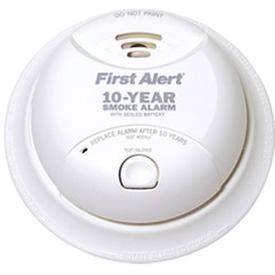
The new legislation has found a way to eliminate many of these issues. It now states that where battery operated smoke alarms are permitted, over the next few years, certain older residences will require a smoke alarm on every level of the home and require all battery operated smoke alarms to be sealed, tamper-resistant units incorporating a silence/hush button and the use of long-life batteries (good for 10 years- the life of the smoke alarm). This eliminates the ability for people to remove the battery when they burn toast; instead they will just hit the hush button, which should silence the smoke alarm for approximately eight (8) minutes, according to the State Fire Marshal William E. Barnard.
The cost of these new smoke alarms is approximately 20% less, over the 10-year life of the device, when compared to the smoke alarms with a removable nine-volt battery that must be replaced at least once a year.
Once the long-life batteries reach the end of their life cycle (10 years), the entire smoke alarm should be replaced as specified per manufacture's recommendations and the State Fire Prevention Code.
Both bills passed unanimously through legislation. On May 16, 2013, Governor Martin O'Malley signed this bill to take affect on July 1, 2013. |